

|
Getting your Trinity Audio player ready...
|
By Abdullahi Irshat
The Wajir Diaries: The Stories of Our People and My Pen
Mohamoud Mohamed Said widely known as “ChiefRat” or “ChiefReet”—is not a man easily confined to titles.
Affable, social, simple and easy-going, he has been many things: a teacher, a family man, a headmaster, a mentor and, above all, a respected elder. Yet perhaps the greatest asset he carries at the peak of his career is the lasting impact he has had on the many students he taught and mentored.
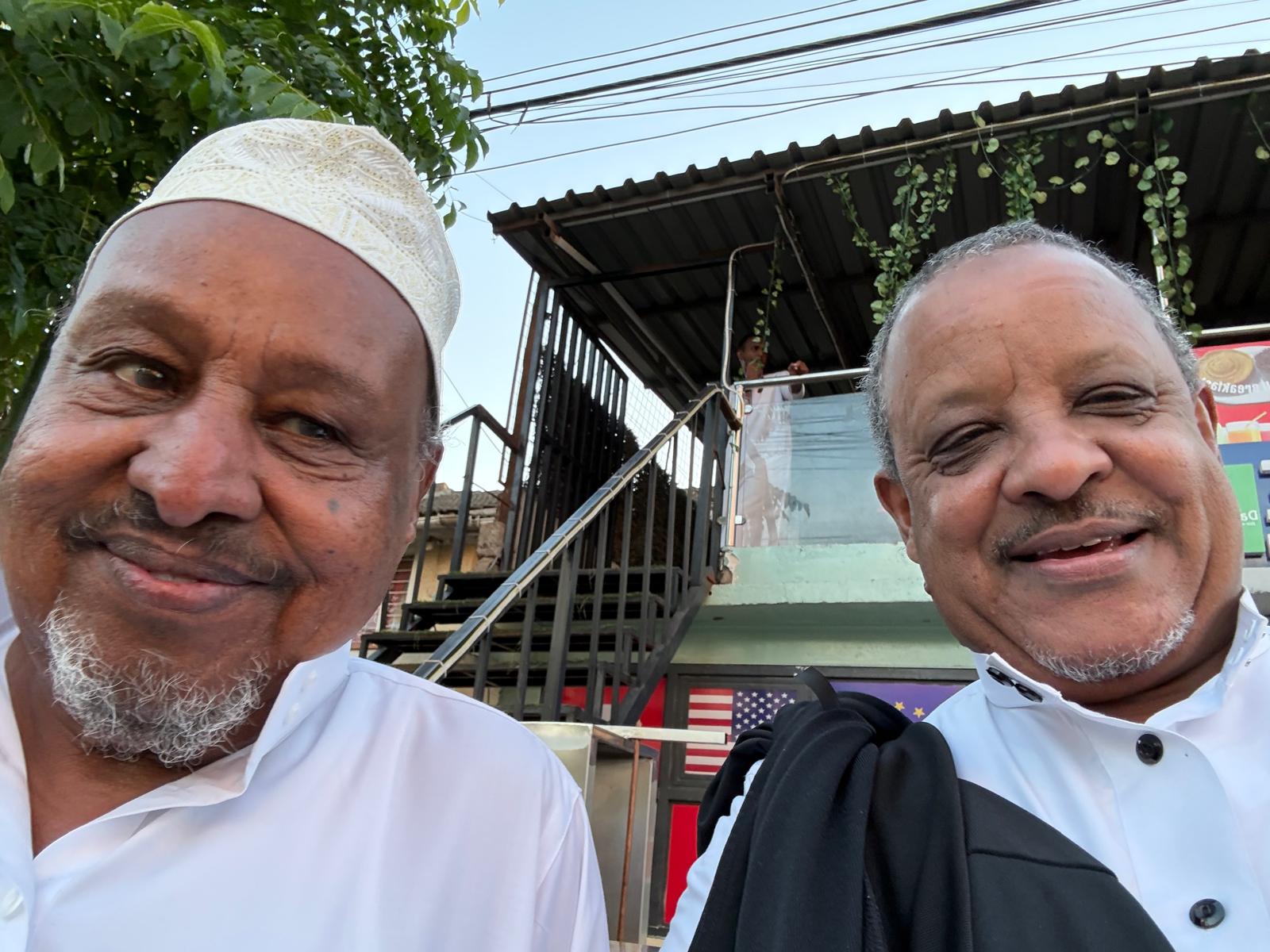
I met him recently, after many years, at a modest café along Magoya Street in South C, Nairobi.
Time, as it does with all of us, had left its mark. He looked much older than in his younger days, but surprisingly, he remained bright, alert and full of energy. His warmth, humour and unmistakable presence were still intact. Even his old chuckle remained as pleasant and hilarious as ever.
Our conversation, over “shaah iyo sheko”—tea and laughter—eventually turned to the origin of his unusual nickname, ChiefRat.
With a smile, he revisited his school days, when he once played the character “Chief Rat” in an English folktale reader. The name endured—and so did the personality behind it.
Then came the fun part: exchanging kaftan and recalling the light-hearted, adventurous days of our youth.
At one point, I teased him about having gained weight. He quickly fired back that I had become even more “bulky and burly” than him.
Beneath the laughter, however, was a shared understanding that we belonged to a generation shaped by determination, discipline, purpose and a deep sense of responsibility toward one another—as our brother’s keeper and as Rer Wajeer.
From Teacher to Headmaster
Maalim Said, or ChiefReet as many may call him, began his teaching career at Wajir Primary School.
He later became headmaster of Buna Primary School before returning to Wajir Full Primary School, where he continued serving through the 1970s and beyond.
He would later move into adult education, eventually serving as a District Education Officer.
Throughout his career, one principle remained constant: education, to him, was never merely a profession. It was a responsibility to uplift individuals and transform communities.
Over the years, he taught and mentored hundreds of students. Many went on to become professionals—including district commissioners, doctors, surgeons, educators, ambassadors, public leaders and senior officers in the armed forces. Others built new lives in North America and Europe.
Others followed different paths, becoming mothers, wives and pillars of their families and communities.
Some lost their way.
But to Said, every student mattered.
The Student Who Nearly Walked Away
One story he shared with particular seriousness captures the depth of his commitment to his students.
He recalled a bright pupil who, only weeks before sitting the Kenya Certificate of Primary Education (KCPE) examination, was persuaded by another student who had dropped out of school to abandon his education and join the Administrative Police.
Maalim Said intervened.
He brought the boy back and personally ensured that he continued with his education.
With support from a Catholic mission and Father John, the student’s schooling and fees were secured, allowing him to proceed to Wajir High School.
The same boy would eventually return to the very school he had nearly missed, becoming a teacher at Wajir High School.
Today, he has risen to become a Chief Principal at the same institution.
A single intervention had changed the course of his life.
For Said, however, such interventions were never isolated incidents.
He regularly supported poor and underprivileged students who showed promise. He sought school fees for them and recommended many to institutions such as Starehe Boys’ Centre.
Several of those students would go on to excel in demanding professions, including medicine.
When 66 Successful Pupils Had Nowhere to Go
Perhaps one of the greatest tests of his commitment came in 1980.
That year, 86 pupils from Wajir Primary School sat for KCPE, and nearly all passed.
But only about 20 were admitted to Wajir High School.
The remaining successful pupils were left without a clear path into secondary education. At the time, Wajir High School was the only secondary school serving the area.
For Said, accepting that situation was not an option.
Together with fellow teachers and volunteers, he helped oversee the construction of two classrooms to accommodate the pupils who had been left out.
The initiative received support from the then District Education Officer, the late Maalim Ibrahim Deere, and District Commissioner P. S. Mungale.
That small intervention eventually gave birth to what became Sabunley Secondary School.
The school initially operated from Wajir Primary School for its first two years before eventually moving to its present location.
“At one point, I was headmaster of both Wajir Primary and Sabunley Secondary,” Said recalled with a chuckle.
“The secondary school operated within the primary school grounds.”
What began as an urgent response to a shortage of secondary-school places would grow into a fully established institution.
A Legacy That Continues
The original classrooms built at Wajir Primary School out of necessity and conviction have themselves taken on another important role. They now serve deaf and blind learners, continuing a legacy of inclusion that began decades ago.
Said speaks with deep appreciation of the teachers and volunteers who supported the Sabunley initiative during its infancy. Many worked and taught with limited training and resources, driven largely by their commitment to ensuring that children in Wajir had access to education.
He also credits the late P. S. Mungale, the District Commissioner at the time, for standing firmly behind the initiative and supporting the construction through harambee contributions.
“I Was Always Sympathetic to Poor Students”
Reflecting on his life’s work, Said remains characteristically simple and modest about his achievements.
To him, he simply did what needed to be done.
Yet the impact of those decisions has followed him throughout his life.
Many of his former students, now established professionals, have reciprocated his kindness in remarkable ways—particularly when he later faced serious health challenges.
At one point, he reflected on the fact that the surgeon who treated him was one of his former students.
“My surgeon was my student, and he charged me no penny,” he said.
He also recalled the students he had helped gain access to better educational opportunities.
“I was always sympathetic to poor students. Some of those I recommended to Starehe never let me down. They have become surgeons and doctors.”
There is something deeply moving about that full circle.
A teacher helps a child when the child has little or nothing to offer in return.
Decades later, that same child becomes a professional—and finds an opportunity to give back to the teacher who believed in him.
A Teacher’s Legacy
In an era when the role of teachers and educators can sometimes be overlooked or undervalued, the story of Maalim Mohamoud Mohamed Said offers a powerful reminder of what committed educators can accomplish.
His legacy is not primarily written in titles, certificates or formal recognition.
It is written in the lives of the people he taught.
It is in the doctors who once sat in his classrooms.
The teachers who followed in his footsteps.
The public servants and professionals who found opportunities because someone intervened at the right moment.
The students who might otherwise have been left behind.
And in institutions such as Sabunley Secondary School, which grew from a simple conviction that a child who had passed an examination should not be denied the opportunity to continue learning.
ChiefRat. ChiefReet. Maalim Said.
Whatever name you choose to call him, perhaps the most fitting description is simply this:
A teacher who refused to leave children behind.
This article was written by Abdullahi Irshat as part of The Wajir Diaries: The Stories of Our People and My Pen.