

|
Getting your Trinity Audio player ready...
|

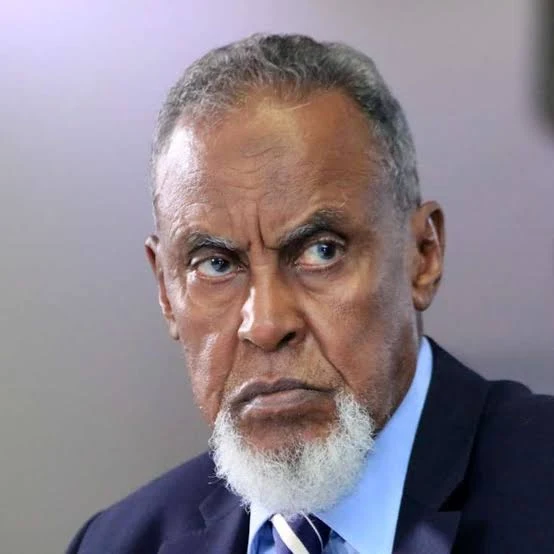
Yusuf Haji was one of Kenya’s longest-serving civil servants and statesmen. Hailing from Ijara in Garissa County, a region renowned for its conservatism, harmony, and peaceful coexistence, he embodied the values of tolerance, public service, and nationhood.
He was a courageous leader whose boldness was perhaps best illustrated by his determination to establish Ijara as a constituency. At a time when few dared challenge or persuade President Daniel arap Moi, Haji convinced him to visit and inaugurate the new constituency. According to local recollections, when President Moi landed in what was then little more than a sparsely populated hamlet of a few huts and wattle structures, he looked around in surprise and asked, “Haji, wapi Ijara?” (“Haji, where is this Ijara you have been talking about? Is this the place?”)
Today, that once-forgotten settlement has grown into one of the most peaceful and progressive towns in North Eastern Kenya. It has become a place where civil servants willingly accept postings, settle with their families, integrate into the local community, and build lasting friendships without fear, prejudice, or intimidation. In many ways, the transformation of Ijara reflects Haji’s own vision of peaceful development and inclusive leadership.
For more than five decades, Mohamed Yusuf Haji dedicated his life to public service. His career took him to some of Kenya’s most politically sensitive regions, including the Rift Valley and the Mount Kenya region, where he was frequently deployed to restore calm during periods of tension. Wherever he served, he discharged his duties with distinction, professionalism, and remarkable composure.
He served successive Kenyan administrations, beginning with President Jomo Kenyatta, through President Daniel Arap Moi, President Mwai Kibaki, and President Uhuru Kenyatta. Few public servants in Kenya can claim such a distinguished and enduring career spanning four presidencies.
He began his journey in the Provincial Administration as a District Officer before steadily rising through the ranks to become a District Commissioner and eventually a Provincial Commissioner. Throughout his administrative career, Mohamed Haji earned a reputation as a firm but fair administrator. While many provincial administrators of his era were remembered for their harsh and heavy-handed methods, Haji distinguished himself through moderation, dialogue, discipline, and professionalism. His authority rested not on intimidation but on integrity, impartiality, and quiet resolve. Even in politically volatile regions, he earned the respect and confidence of the communities he served.
In 2008, he transitioned from the civil service into national politics when he was appointed Kenya’s Minister for Defence, serving until 2013. His appointment was widely regarded as a reflection of the immense confidence, trust, and respect he had earned throughout his public service. In 2012, he briefly served as Acting Minister for Internal Security and Provincial Administration before being elected Senator for Garissa County in 2013, where he continued to serve with distinction until his passing on 15 February 2021.
Mohamed Yusuf Haji will be remembered as one of Kenya’s finest administrators and most respected public servants. Throughout a career spanning more than half a century—during a period when the country experienced political upheaval, corruption scandals, and accusations of abuse of office—his name remained largely free from allegations of corruption, personal scandal, or misuse of public resources. Such a legacy is rare and deserves the highest honour.
On a personal level, Mohamed Haji was a man I admired from my youth. I first came to know of him while growing up in Nakuru during his years as a District Officer, District Commissioner, and Provincial Commissioner in Nyahururu, Murang’a, and the Rift Valley.
As a young college student, I once visited his home in Nakuru’s Milimani estate without an appointment. Despite his position as one of the most powerful provincial administrators in the Rift Valley at the time, I was received with remarkable warmth and humility. His gracious wife welcomed me with traditional Somali tea, and I was treated not as a stranger but as family. For a young man, that simple act of kindness left an unforgettable impression. The warmth of that welcome remains one of my fondest memories.
To me, Mohamed Yusuf Haji embodied everything one could hope for in a father, an uncle, and an elder of the Somali community. He was simple, approachable, tall, handsome, and dignified. He possessed extraordinary patience, quiet confidence, humility, and exceptional efficiency. Whether dealing with friends or political opponents, he treated people with respect and fairness, earning admiration from colleagues, subordinates, and ordinary Kenyans alike.
His life stands as a lasting testament to honor, discipline, integrity, and selfless public service. Kenya has lost an exceptional statesman, but his legacy will continue to inspire generations of public servants.
May Allah (SWT) grant him Jannatul Firdaus, forgive his shortcomings, and reward him abundantly for his lifelong service to humanity and his nation. Ameen.
By Abdullahi Irshat