

|
Getting your Trinity Audio player ready...
|
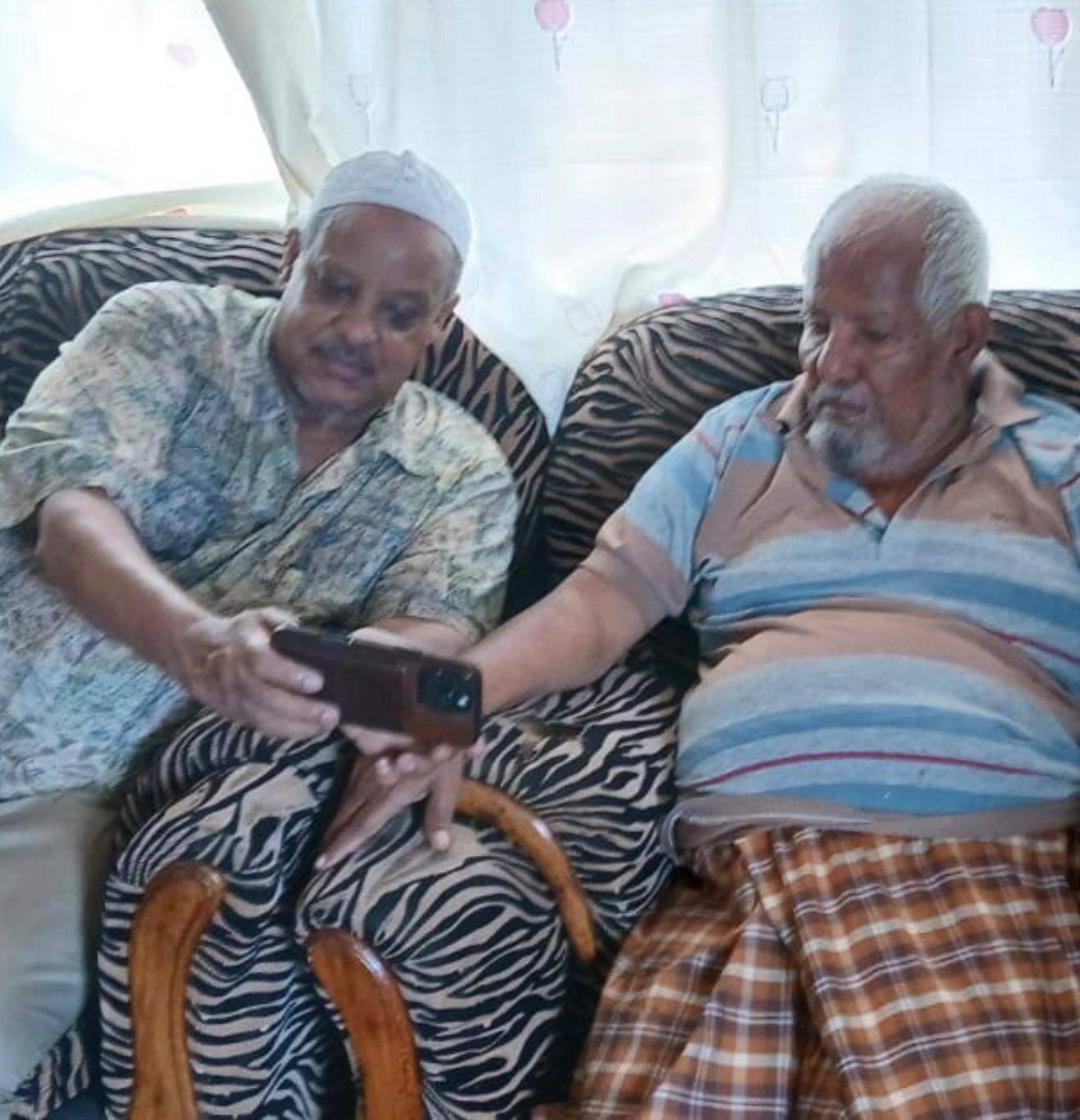
It had been more than half a century since I last saw him. Sitting with him at his modest home in Barani, Malindi, filled me with a quiet sense of hope. I felt something profound—an unspoken sense of purpose, gratitude, and reflection.
As we conversed, time, in its mysterious way, seemed to carry us both back to those distant days of the 1960s. Now in his mid-eighties, Bakorda, as he is fondly remembered, appeared a man weathered by time and weakened by illness and age. A partial stroke he suffered a few years ago had taken much of his memory. He struggled to place me, softly repeating my name as I said to him, “Irshat… Irshat….”
As though searching for a connection, the name seemed just beyond his reach. Yet, even in that fragile state of mind, much had not changed in his once handsome, baby-faced looks. With his hair now completely grey, he still retained that familiar appearance. As I jogged his memory, there were moments when the past came alive again—fleeting flashes of something distant returning to him.
When I asked about his colleagues, his memory flickered with surprising clarity. He spoke of the late Mwalimu Ibrahim Dheere as a man to whom he felt deeply indebted—someone who supported him in times of need. He also spoke warmly of Charles Waititu, describing him as a truly Kikuyu gentleman—tall and handsome, indeed a man larger than life.
Charles, he recalled, was the headmaster of Wajir Primary School at the time, a figure who commanded both respect and admiration from the community he served.
He also remembered the late Abdi Ali Hirsi, one of the finest history teachers of that era, who later served as the Member of Parliament for Wajir South in the 1980s. When I asked if he could recall anyone else, the name Crispus Irungu surfaced—another early teacher who helped shape our formative years.
“I visited him in Chogoria, Meru, and saw his family before he died last year,” he said.
As I sat before Bakorda, I felt myself transported back in time. Once again, I felt like a young school pupil, sitting in the presence of one of the last remaining teachers from that remarkable decade. He carried himself with quiet dignity and humility.
The only Arab teacher at the school then, he spoke fluent Somali and authored Somali children’s folktale books—Sheeko Carruureed and Dhegna Meel Dheer, Dhagaxna Meel Dhow—published by Longhorn. He was also part of a team that authored The Development of Education in NFD in the early 1990s.
As one of the early pioneers of education in the northern region, he also had a deep love for the guitar. When I reminded him of it, he smiled shyly and said, “I still have the guitar, though I no longer play.”
When I asked about the songs he used to play for us, he managed to recall one—“Ali Dooley.”
When I tried to press him to recall a night in the 1960s when Shifta bandits invaded Wajir Primary School and robbed students of their property and clothes, he looked at me distantly, unable to remember. It was an incident in which the students pleaded with the bandits not to harm their teachers, describing them as good men and dedicated educators, most of whom had come from upcountry. Their lives were spared.
Years later, in one of my interviews with Crispus Irungu, the longest-serving teacher in Wajir (1963–1996), he said:
“The biggest problem I have had with my Wajir experience is convincing others, especially those from upcountry, Nywele Ngumu, that Somalis are good and hospitable people. It pained me that they never believed me—that Somalis are people I have lived among for 33 years.
“I have lived among them peacefully, even during the dreadful Shifta era, the peak of brutality. I always felt safe. They trust you if you earn their trust by respecting their culture and religion.”
In that moment, I felt I had accomplished something I once thought impossible: seeing and reconnecting with a man who shaped my earliest years.
One of his most remarkable qualities was that, despite coming from an Arab family, Bakorda treated every student with fairness, respect, and humanity.
And as much as time may have dimmed his memory, it has not erased the mark he left behind. In that humble home in Malindi, I was reminded that the true measure of a teacher lies not in what they remember, but in what their students never forget.