



|
Getting your Trinity Audio player ready...
|
Finding Sanity in the Beautiful City of Garissa
By Abdullahi Irshat Sheikh
It’s been more than forty-years since I was last here, Garissa. My last visit was in 1980 during the dreadful Garissa Gubay, meaning the burning of the Garissa City.
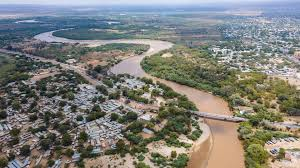
Garissa has grown since, daringly and dutifully outgrown its age, size and beauty. And from a sparse hamlets of estate and periphery clusters of villages to a thriving cosmopolitan beautiful city in the sun with high-rises and low-raised buildings, high walled barbed wired, displaying an abundant sign of wealth and prosperity but for some and not all.
My driver, a gracious young polite and petite fellow pointed to the distance sparkling city lights and said, “that is Garissa”. He added, “shortly, we will be approaching Mororo”, a largely humble outpost, on the way to Garissa. The time was a little early in the evening, 8pm and the night was forming with a soothing breeze that cooled the soul. For me, visiting Garissa after more than forty-one years was an inner mission, a kind of pilgrim journey to retrace my old steps and this gave me a sense of nostalgic aura of the past. The moment was startlingly gripping and my mixed anticipation swirled my head. As we approached Mororo, a small outpost on the way, the place had dramatically changed for the better, with gas-station and modern business. But there was no change to the police barrier and the Tana river bridge, stagnated as ever. Crossing the famous Garissa bridge, everywhere, the city sparkled like a marble in the moon. The evening twilights shined high under the seamless heavenly blue skies and adding to the joyous scenes were high street lights. Unlike Wajir, a sibling town to the north, it appeared Garissa had dutifully invested in street lights across the town. But as Wajir, sadly, they have vandalized (cannibalized) the solar batteries of the street lights put up by the then Wajir first Governor Jiir. This marked the difference between what good citizen’s can do and what bad citizens do with the later, Wajir robbing the future from themselves.
The Garissa street light sparkled at every corner of the town. And all around, the streets were clogged with people and the scene appeared to be from the Procession in the film the Ten-Commandment; people milling, cars clogging and cows and pulley-carts-manned by sweat-drenching competed for place and space in peace with each others. Evening walkers lazily and leisurely walked should-to-shoulder and others selling their wares at the tarmac edge sometimes spilled to the road. Elsewhere pedestrians devoid of the traffic law and with no designated pedestrian crossing callously crossed the road at any point as rude, rowdily motorists and cyclists speeding or violating traffic added to the annoying spectacles. Some motorists, few (bad apples) stopped anywhere, in the middle of the road to converse or exchange phone numbers, clogging the traffic and not caring a hoot. This appeared to be a common cultural practice, my guide told me with a disapprove in his voice. Elsewhere, spicing the occasion, women and men jostling for brisk business nearly crashed your head off too. Against this, a melodious sound of the past, 70s from Somali legend Samatar filled the air across the street.
Then came the moment of truth: my “woow, woow” moment as tall slim Somali beautiful women, their beauty make in the heavens in light tendril shoal stretching out their long necks among the crowd. And this made my heart skip a beat, their dark amber skin shining under the light and with matching Somali shoals that twined around their heads, boobs and bosoms. And as a light wind fitfully moved their dark tendril shoals in the air, the evening became more numbing. And all the while, as Garissa gave its best, it was soothingly inviting evening. Occasionally, scents of perfume melted unto the air and light laughter echoed away and all emanating from this beautiful Somali angles, born in Garissa and breaded a Somali. At the climax of the moment, disruptively, carhorns pierced the ears splitting the evening with a bile taste. And all along the way the route, I passed the old places I could remember of the 80s: For one, the Safari Lodge was my home and the place I was holed up in 1980, during the Garissa Gubay.
Such was the heavenly inviting moments of my arrival at Garissa on this day, Saturday evening, this August, 2021….. …:But forty-one years ago, on another Saturday evening around the same time, 8pm, the story was different. It was a time when our beautiful Garissa City was burnt to ashes by the combine security forces, in what is remembered as Garissa Gubay. The year was 1980.
In my small room off the road of Gestow village, I am watching a snippets of TV news and scenes from Afghanistan; images of civilians in desperate panic and flight. With jolts, my mind plays scenes from the past to another time in history where despair and desperation was the vocabulary of the moments at Garissa in 1980. It was during the dreadful despotic rule of Arap Moi. Most alive now would remember this Garissa killing as a “The Garissa massacre” or more popularly Garissa Gubay or as others would remember the day as the Black Sunday.
Visiting the city for the first time since to reconstruct my old steps more than four decades ago gave me both a mixed feeling of sadness and excitement. I was one of the victims of the vicious terror night of Garissa Gubay. The occasion gave way to a rustic sense of deja-vu. But beyond the pale of the old time, a fine streak of hope fills my heart for the first time.
The city seems to have moved from the rungs of ashes to a city now posed for the pinnaces. In 1980, Garissa place was a small hamlet village-like with mud-wattle temporary and semi-permanent building and plots fenced with dried thorny acacia and with just few permanent structures but mostly in the peripheral villages, predominantly Somali huts reigned. The famous joints of all at the time was Garissa Yarrey or small Garissa. The sparse streets of Garissa Yarey, that I knew then was now clogged with a street hawkers, patrons and beauty parlors and eagle-eyed hawkers making brisk business, as bike-riders and boda-bboda’s with no sense of respect to traffic rules and masses milling the streets jostling for space filled the places.
Now with prosperity filling the pockets of the people at least for the middle and upper class of Garissa, dalliance with cars, some vastly expensive was welcoming. But the most unwelcoming were few motorist and cars barricading your way with no undue regards to traffic rules and the poor begging in the streets. Annoying we’re cars stopping in the middle of the road with driver stopping to greet, converse or exchange phone numbers.
Visiting the spot, Garissa primary school where I, and my people (the people of Garissa) were held, starved and tortured for nights and day on end was gut-wrenching. Reeling my memory to this day, Garissa Gubay gives me goosebumps. On this day, Saturday, in 1980, It was a warm evening, the sun had set and the evening was forming, when Garissa Gubay took place. It was the last peaceful Garissa I knew then but forty-one years later, I am back enjoying another Garissa on another Saturday around the same time 8.00pm on August evening in 2021: and a new Garissa that is posed for the pinnacles at peace with itself, developed and prosperous where the sky is the limit. With modern high class Lantern Resort, Nile Palace and Hulugo’s among the many other bounties, and beauty.
Long-live Garissa and the resilient beautiful people of Garissa.


