



|
Getting your Trinity Audio player ready...
|
From the Wajir Diaries: Travelling Journal
Meeting Hon. Ibrahim Ali Hussein a.k.a Ibrahim Seerr
By Abdullahi Irshat
This is the story of my people, their pain, and my pen.
Unpopularly, known as “Ibrahim Seerr”, meaning, “the man who created borders”; he says, he has seen it all: a fight to stay relevant in a competitive world, a fight over the corridors of Kenyan courts fighting for Adjuran rights and land, and a fight to stay afloat in declining political career. And most of all, a struggle to get out of poverty, and self-educate himself. And midst of this is his close nemesis, his very Adjurans kinships fighting him, politically with tooth and nail and with no atom of energy spared. This is the story of Ibrahim Ali Hussein, a man in decline but ever-determined.
With polished English, he says, he is a self-made-man, without ever stepping in a formal classroom. He started his career as a waiter at Ali Gaab hotel in Wajir in 1956 with another Fai man. In the 60s, he trained as a peace officer at Kiganjo. He later became an intelligent officer at Marsabit and worked at various stations before venturing into politic out of necessity. With popular public demand on his side, he resigned and went into politics. He said, the Adjuran leaders, the late Hon.Abdi Nurrow and later, Hon. Abdullahi Abdi Futey did nothing for Adjurans. Instead, they pallidly danced with Rerow Mohamud popularly known as RMs and Muhumed Yarrow, MY. The RMs and MY are synonymous and one and the same but the late Muhumed Yarrow was the kingpin of the RMs at the time. Tall, and filthy rich, and handsome, bold and authoritatively brave, he gave tall orders as a king not only in the Degodia world but in all of Wajir. And that was when the RMs were political and economical supremo in Wajir, and they held Wajir by the strand of the neck. And everyone else was a pawn…. and the current “Mataan chorus” was certainly non-existence at the time, or maybe unborn or still-birth, I don’t know which.
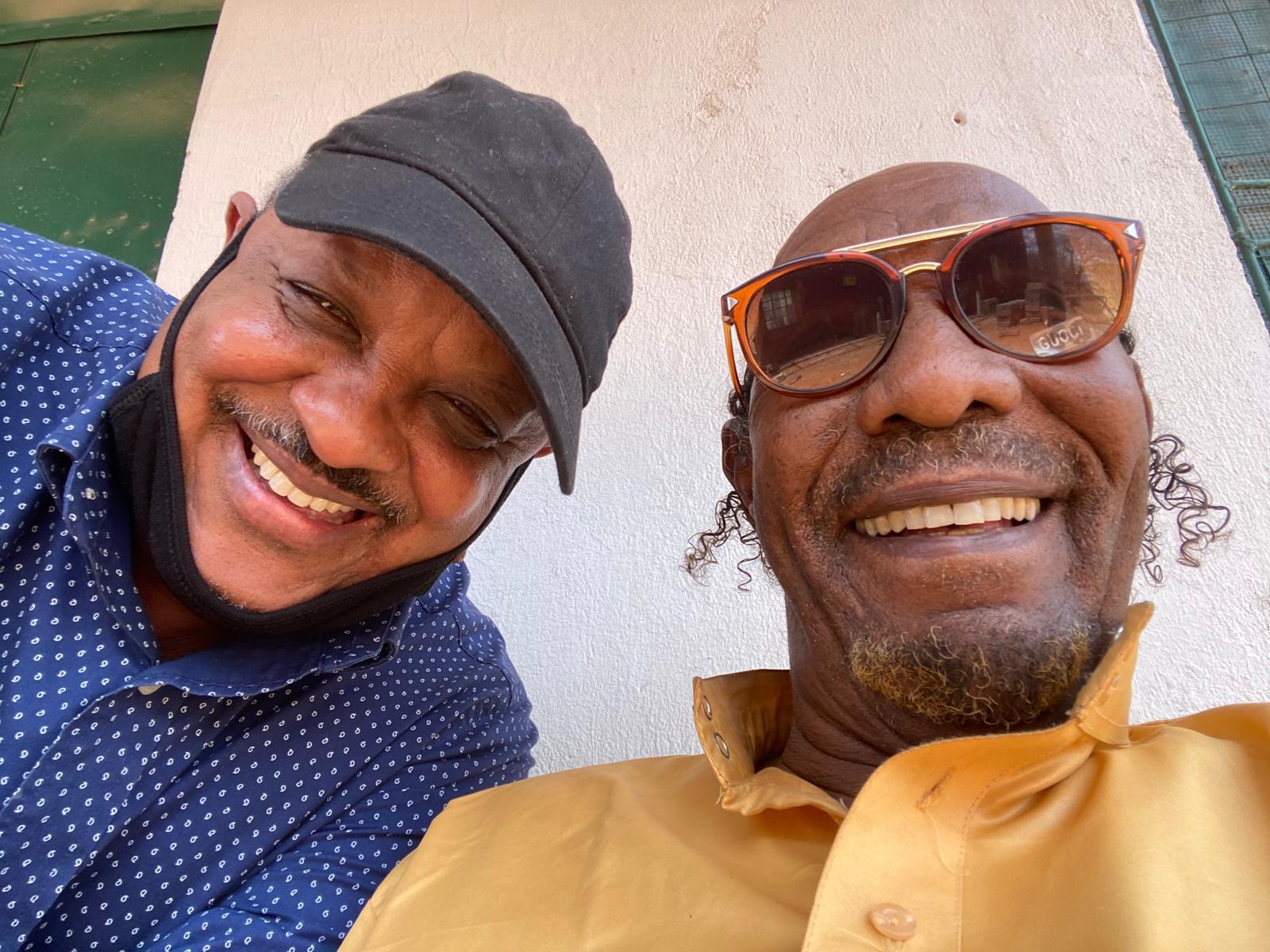
It was around that time that, Mzee Ibrahim field his candidature. Unlike his current perception out there, Mzee Ibrahim is sterlingly cheerful and friendly and receptively welcoming. Off-course, I have known Mzee Ibrahim for years now and we have always got along well. I have always regarded him as one of the stately old men of Wajir, friendly and many times a father-like old man like any other. Contrary to the unpopular perception of many, Mzee Ibrahim can be provocatively engaging too. He is a thoughtful man, a great debater who is not easily offended. He also never shies away from controversies that many would put under the rag especially the Degodia and Adjuran rivalries. Much of his stint as an MP earned him the less generous term, “Ibrahim Seer” as a result of laboriously devoting much of his effort on advocating for his adjuran clan and a strictly trying to enforcing of border separation between the Adjuran and Degodia in Wajir West to keep the later at bay. During his MP-ship, he was able to bar the late Hon.Abdisirat Khalif from stepping in Griftu. Thus, this earned him the name “Ibrahim Seer”. It was then the “Ibrahim Seerr” was stubbornly tagged to his tail.
Historically, the land of what use to be formerly Wajir West has changed hands at different point in the annals of history with the Borana occupying it as the owners before they were dislodged by Iddo-Roble, the great Adjuran warrior in the 30s or 40s. It has since been divided into Wajir North and Wajir West in the late nineties as part of solving the perennial clashes between the two clans, namely, degodia and adjuran. This is how the present Degodia enclaves at Eldas, and Hadado and Arbajahan came into being. And with the small Fardanow, the elder of the Degodia clan taking the “Tarantula” pie. Suffice, over the years, the most of the Degodia clans, except Fai have migrated from Wajir East, a dry patchy land with little pastures and occupied a large swath of land belonging to traditional colonial grazing land of the Adjuran, in what was Wajir West. Over time, they, RMs conquered and claimed it as theirs. Leading the way were the RMs wielding both political power’s through the Khalif’s-family and economical prowess through the late charismatic Muhumed Yarrow; the RMs were at the height of power and then there were the RMs flower-girls in the struggle too who spiced the time when others were less glamorous, and keeping to the modesty. It was then they, the RMs led the expedition for Wajir West land in the late 60s and 70s to the chagrin’s of the Adjurans. This is when the “laba-I-tabanka”, (the 12-ka) took hold and became a rallying cry in Wajir. And the 12-ka beauties, a handful played part in the struggles. In the book, Tales from the Dark Continent, these are described as the sleeping dictionaries. One big defeat for the Adjuran was mostly the Degodia numerosity, which the Adjurans could not match, and probably resources. And this is when the Degodia’s took the upper hand and the upper land of Wajir West and subsequently the Adjurans loosing their prime grazing land. And this how Wagalla, Griftu and Hadado went for the RM’s and Arbajahan and Athibohole to others. Towards Buna side, the Jibrails, a degodia section, popularly known as the JBs, they craftily forged a carrot and stick methods, by at one point forming alliance with the Adjurans, in what is remembered as “the new founded adjuran clan” in the 80s. And a notable bad time of clan conflict came in the early-eighties during which periodical clan conflicts sparked by political west seat fiercely ended into a bad conflict between the two Somali clans of Degodia and Adjuran spilling into what is remembered as the Wagalla massacre of 1984.
By and large, Mzee Ibrahim can be said to be a hardline and revered for his stand to introduce borders between the two clans thus earning him the nickname, Ibrahim Seer. He says, it is the RMs; the Khalif’s and the late Muhumed Yarrow, who was the RM supremo who branded him with the Ibrahim Seerr tag because of his relentless commitment to the cause of his Adjuran people and their rights to survival. At one point, he says, he barred Hon. Khalif from Griftu when he was an MP with a stern threat to his life. This is when he was tagged, Ibrahim Seer. He strongly believes that the Adjurans have been short-circuited and that his mission was to salvage them from the fangs of the oppressers, the Degodia’s remains his goal. He believes that, had his policies been embraced, the Adjuran land would have been intact, not fallen or taken away. He adds, “I believe in the Adjuran struggle. And that, he will die defending it”. Certainly, and admirably, it’s a cause he cherishes to this day in spite of his loss of influence, power and in advance feeble age.
Today, in spite of all this, the Adjuran have a tussle over leadership with the influential Gelbaris not agreeing on the basic leadership of the family; they are divided over the representation of Buna-Batalu ward with the Tessoots and the Cherroots of the stubborn Gelbaris clan, not agreeing. Sometimes, you would sympathize but at times one would think, the adjuran problem is their making esp if they can’t agree on simple ward. The question that begs an answer is how would they agree on the larger pie.
Coming back to Mzee Ibrahim’s, the problem for him today is that, his ideas are mooted in the old Kenya, where the colonial relic of clan grazing separation was the “in-thing”. But this is era, his idea is neither here nor there. Indeed, such controversy and utopia are not uncommon for anyone who believes in his cause to defend his people’s rights. But the catch is that, in this present era, borders are unrealistic. And many communities have tried, Wajir South, Mandera Garre etc. Most zeal leaders who have agitated in past for such have passed on without seeing the fruits of their labor. The other distal catch is that such dream and idealism can resonate in the roots of patriotic old songs and poems, not in today’s reality where freedom of movement is enshrined in the 2010 Kenya constitution. Against this background, it’s hard to implement this ideas of Kenyans living within the confines of colonial borders. However, in this vitreously volatile Kenya’s northern Kenya ASAL pastoralist region’s which has seen much clashes between clans from Marigat to Mogotio, Lodwar to Logitiang, over colonial grazing land and boundaries; it is hard to keep clans apart mainly because of nomadic pastoralists lifestyle’s that dictates water and pastures as their primary priority and survival. And while it is rightly fair to respect clan’s historical rights and fair traditional cultural settlements; and with their consent, graze; this has not happened for the degodia and Adjurans, leading to periodical conflicts… and this is where Mzee Ibrahim’s idea is embedded and emboldened. Often, unlike other sedentary Kenyans, it is a problem to keep nomadic pastoralist lands within the confines of artificial borders. In the rough and tough but stubborn simple and arrogant minds of nomadic pastoralists, they have no definition of borders and this is hard to enforce under new Kenya constitution. The former, no nonsense Provincial Commissioner, Salah tried it, but he could not hold around the Buna-belt. Often, migration of pastoralist is dependent on the rare commodity of water and pastures for their beasts.
The other unique part of Mzee Ibrahim sorry story is that, the larger Adjuran overwhelmingly did not support him, and he blames a section of his compatriots for this Degodia vs Adjuran mishap, the largely, “few elite Gelbaris”, who opposed to his brand of politics and policies and personalities. “They thwarted my effort of keeping Degodias at bay.”
But when I asked him if it is true that he wanted to create a buffer, border between Degodia and Adjuran, the so called Seer, border….. he said: “there was no any other option to save Adjurans from the columns of Degodias invasion usurping our Adjuran land of Wajir West”, he said. He also blames this on his own very people for this omission. He is bitterly unforgiving on this and adds with a resigned tailing note, “they the Adjurans joined RM in thwarting my effort to lead them. They were cheaply herded to the other side of the aisle, to the RMs side and they supported the Khalif’s.”
In any case, while there is no right way to think about this complex issue of Adjuran and Degodia, a flare-up of clashes is not unexpected in the near future especially along the triangle of Buna, Lakole and Eldas where the conflict of adjuran and Degodia remains perennially tense for most of the recent years. This posits a casual relationships between means and ends, and with much pressure on Buna, and the triangle, the siege of Buna enclave is inevitable with time as demand, competition and pressure for land and resource depletion take toll on the land and another pastoralist conflict becomes imminent. And with old wounds easily skewed in the part of the world; the end of the last defense for Adjuran, Buna is on a shaky ground. And this reminds me of the earlier encounter between the Adjurans and the Borana at Buna when in another conflict in another era took place the late thirties. The later, Borana’s were evicted from Buna in what is known as “The Siege of Buna”. This when the Borana were forcefully dislodged from Buna by Adjurans and along with a section of Gelible Degodia, who have since assimilated into adjuran as Adjuran Rerow-Dinii. And whether this will translate into a “karma” or not is a matter of time and as the old saying goes: “whatever goes around comes around.”
PART II
The political rise and fall of Hon. Ibrahim and the Adjuran Massacre in the sixties coming soon.


