

|
Getting your Trinity Audio player ready...
|
Deep in the arid landscape between Tarbaj and Lafey in Wajir County lies Jangina, a remote settlement where the realities of drought, infrastructure development, and environmental change intersect in complex ways.
A recent field visit to the area revealed scenes that raise important questions about the social and environmental impacts of ongoing construction activities linked to the Tarbaj–Lafey road project.
At one location, thirsty donkeys gathered around limited water sources, a common sight during periods of drought. Nearby, some pastoralist families had fenced off privately purchased water supplies stored in canvases and tanks, hoping the reserves would sustain their households and livestock through difficult weeks ahead.
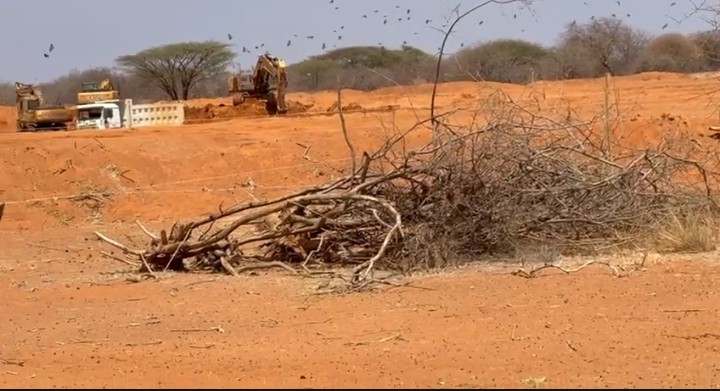
Just a short distance away, heavy machinery operated continuously at a quarry site and borrow pit established to supply construction materials for the road project. The excavation area stretches across a vast section of land, with large quantities of stone and soil being removed from the landscape.
Residents and observers have expressed concern about the long-term consequences of these activities. Questions remain about the scale of extraction taking place, the environmental restoration plans after construction, and the benefits that local communities will receive once the project is completed.
The transformation of the landscape is already visible. Areas that once contained vegetation and trees have been cleared, leaving exposed ground vulnerable to further degradation. The loss of vegetation in drought-prone environments can increase susceptibility to soil erosion and reduce the resilience of local ecosystems.
Another issue drawing attention is water use at the construction site. Water tankers are regularly deployed to suppress dust and maintain construction operations. Yet the contrast is difficult to ignore: while water is being sprayed on roads and excavation sites, nearby communities and livestock continue to struggle with shortages.
This situation raises broader questions about development priorities and community welfare. Infrastructure projects can bring significant long-term benefits, including improved transport, trade, and access to services. However, such projects also carry responsibilities toward the people and environments directly affected by their implementation.
As construction continues, local stakeholders may seek greater clarity regarding environmental safeguards, rehabilitation plans for quarry sites, community compensation mechanisms, and access to water resources during drought periods.
The experience in Jangina serves as a reminder that development is not measured solely by roads and infrastructure. It is also measured by how effectively projects balance economic progress, environmental stewardship, and the well-being of the communities that live alongside them.
