
|
Getting your Trinity Audio player ready...
|
MEETING ABDULKADIR SURVEYOR:
The Man Whose Name Became a Brand That Outlived Generations:
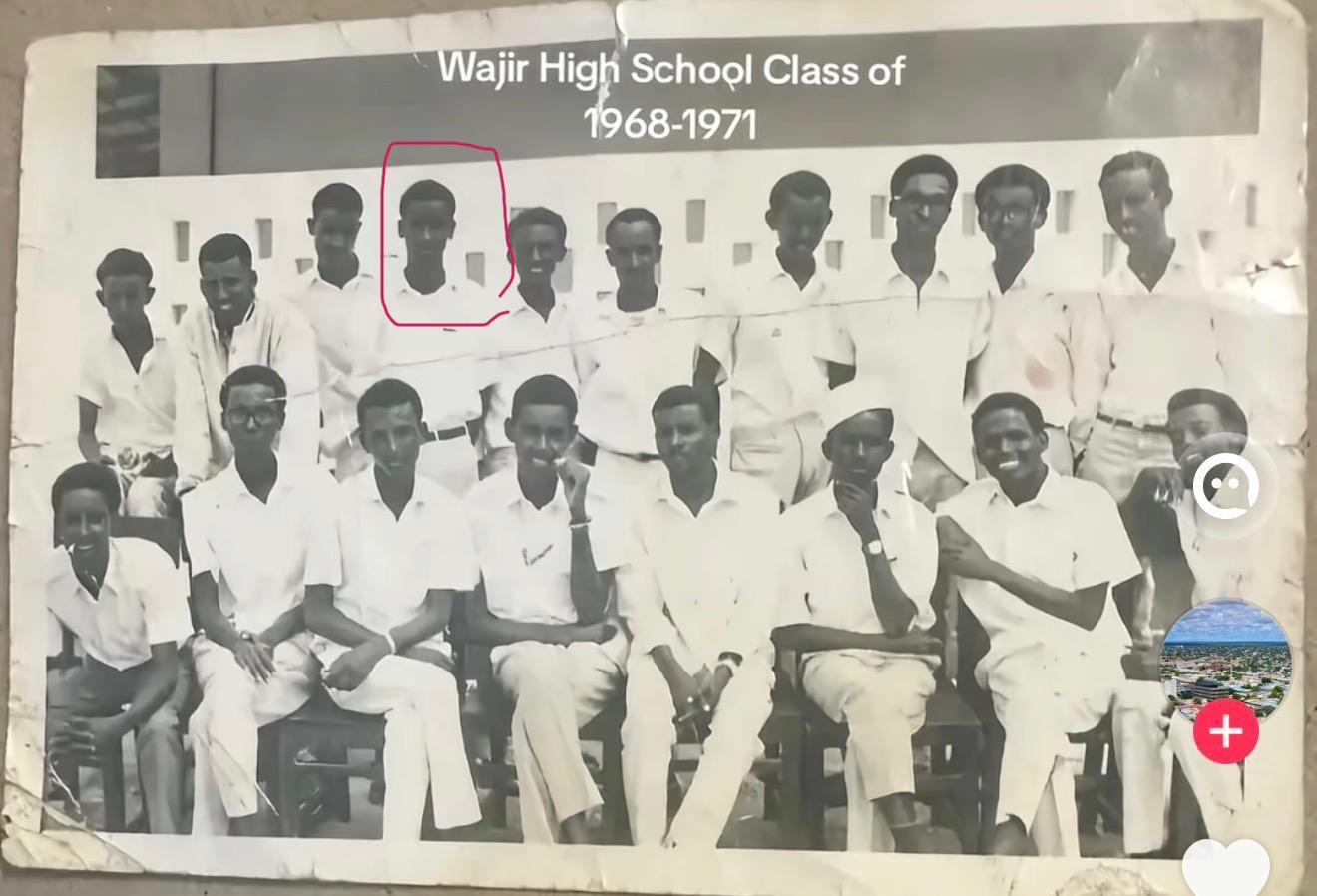
The story takes us back to the 1970s and to Wajir Secondary School (WSS), then widely regarded as the “Oxford of the NFD.” It was an institution that nurtured some of the brightest minds from Northern Kenya and produced the celebrated Blooms Cohort of ’72 — among them Abdulkadir Surveyor, a man whose name would later become synonymous with professionalism, integrity, and excellence in land surveying.
Today, the institution is known as Wajir High School, but its legacy as a cradle of academic distinction remains firmly intact.
Recently, at AsalBees Café off Highway 42, I had the privilege of meeting Abdulkadir — fondly and widely known simply as “Abdulkadir Surveyor” — for a casual conversation over coffee. Over the years, I had heard his name spoken with immense admiration across professional and social circles. Gradually, his identity transcended personal recognition and evolved into a respected brand whose influence has endured across generations.
“Teeing up” for his upcoming memoir chronicling his life journey, Abdulkadir walked me through pace of his personal and professional life: his years at WSS, his pioneering work in land surveying, the mapping of Garissa Caadey, and his service in public office.
At the time, Wajir Secondary School stood as the highest pinnacle of learning in the region — an adventurous and intellectually vibrant institution whose academic standards earned it the title “Oxford of the NFD.” Admission was highly competitive, reserved only for the brightest students who excelled in the CPE examinations.
Reflecting on that era feels like replaying an old black-and-white film — a time when education was treasured and achievement fiercely pursued. I vividly remember missing the admission cut-off because I could not attain the exceptionally high threshold required for entry.
As our conversation shifted toward his early years, I asked Abdulkadir how his name had remained relevant and respected for decades.
With calm humility, he responded:
“We belonged to the pioneer generation of WSS — the class of the 1970s, a top-notch cohort. We worked hard and excelled. Some of us proceeded to A-Levels and university education, while others joined prestigious institutions such as Egerton and various professional fields including water engineering, teaching, range management, and medical training.”
He continued:
“I later joined A-Level and eventually the University of Nairobi. I nearly missed university admission had it not been for Eng. Mumad, who helped enroll me into Photogrammetry within the Faculty of Engineering. I had arrived late for admissions.”
Speaking about the remarkable cohort that elevated academic excellence at WSS, he reflected:
“It was an era when learning was treasured, discipline admired, and success earned through sacrifice and hard work.”
“Our teachers were our mentors,” he added. “They taught with passion, purpose, and unmatched dedication. Among them were Mr. Pritt, Mr. Misckel, the late Ms. Analena Tonneli, and many other committed educators.”
As I listened, my thoughts drifted back to a transformative era in Northern Kenya — a period when some parents courageously embraced formal education while others fiercely resisted it. Those who believed in education’s promise enrolled their children in school despite social pressures and uncertainty.
Students of that generation were driven by a powerful Somali saying:
“Arday waxbarasho u ooman ayaa waalidkood harraadka ka bi’iya,”
meaning, “Students eager for education quench the thirst of their parents.”
Conversely, many rural pastoralist families viewed schooling with suspicion, fearing that children would become “Christianized” — commonly expressed in the phrase “ilmaha waa laa galeyn.”
Those who pursued education emerged as rare pearls — determined, disciplined, and deeply committed to transforming their lives and communities. In that generation, education symbolized dignity, honor, and social worth, while failure often carried stigma and disappointment.
Abdulkadir’s story mirrors the aspirations of an entire generation: brilliant young men who viewed life through the lens of service, resilience, and achievement. Their emergence followed the earlier Standard 4 and Standard 8 generations of the Shariff Shublei era, with WSS becoming the principal gateway to secondary and higher education in the former Northern Frontier District.
Students traveled from distant regions — including Moyale, Mandera, and Garissa — to study at either Wajir Full Primary School or WSS. These institutions became educational lifelines for the entire region.
The WSS Cohort of ’72 consistently ranked among the highest performers in the Cambridge O-Level examinations. Many proceeded to A-Level institutions across Kenya before joining the prestigious “U” — the popular name for the University of Nairobi, then regarded as the ultimate destination for Kenya’s brightest minds.
Among this distinguished generation were Abdulkadir himself, Hon. Eng. Mumad, Eng. Abdullahi Sharawe, Eastleigh businessman Ahmed Yare, Mohamed Sharif, (the best student of 1972 class) and P/S Abdirizak Hajji Adan — individuals united by ambition, intellect, and an unwavering hunger for learning.
Others included Engineer Mohamed Bashir (NaHif), Dr. Hassan Dahiye (Dr. Haagaar), Abdullahi Omar (Galbie), and Ahmed Siyad A. Ogle. Sadly, many of their contemporaries have since passed away, including the late Eno Adawa, a brilliant educationist; the late Nasir Arate, former MP; Abdullahi Sirat Osman; and the late Mohamed Abdalla, among others.
While many of his peers pursued careers in different fields, Abdulkadir chose the rare and demanding discipline of survey engineering — a decision that would eventually define his professional identity. Over time, the name “Abdulkadir Surveyor” evolved into a symbol of competence, credibility, and wisdom.
One of the defining moments of his career came in the 1980s when he participated in the mapping of Garissa Township, then a rapidly expanding town characterized by unregulated settlement patterns and urban disorder. Homes emerged haphazardly across open spaces, fenced by sprawling acacia hedges and lacking organized roads or layouts.
As a young graduate, Abdulkadir undertook the delicate and daunting responsibility of helping map the town — a task that required not only technical precision but also cultural sensitivity and diplomatic skill in navigating clan and community dynamics.
Another pivotal chapter in his life involved politics. Reflecting candidly on his youthful political ambitions, he remarked that he had “burnt his fingers” — a difficult experience that ultimately shaped his wisdom and perspective.
Today, Abdulkadir serves as a respected elder who contributes to peacebuilding efforts, community dialogue, and political discourse while documenting his remarkable life journey in his forthcoming memoir.
During his years in public service, he also served as one of Kenya’s Land Commissioners — a prestigious and demanding national responsibility.
Having studied and worked through different technological eras — from the analogue systems of the twentieth century to modern GPS-enabled mapping technologies — and from the University of Nairobi to the University of Minnesota, Abdulkadir reflects on how each experience enriched and strengthened his professional journey.
Today, “Abdulkadir Surveyor” and the WSS Cohort of ’72 remain deeply respected figures whose contributions continue to inspire younger generations across Northern and Eastern Kenya. Through brilliance, discipline, and unwavering commitment, they helped shape the modern face of the NEP region.
While the 1972 cohort will forever occupy a special place in history, the generations that followed also distinguished themselves through remarkable achievement. Among them were Hussein Unshur of Blue Bird, Engineer Mohaboub, Said Ali Elmi, Nur Hussein, Abdullahi Nur, Madam Nuria, Eng. Ginny, Maalim Alley Sulei, Dr. Kabreta, R.K., Omar K., the Tube’s, Amb. Abdirashid, Prof. Nyanyurai, and many others who continued the tradition of excellence. Others Members of Parliment, Hon. Adan Mohamed Nur etc.
Their achievements bring to mind the Somali proverb:
“Ratiga dambe ratiga hore saanqaadkiisa ayuu leeyahay,”
meaning, “The camels behind follow the footsteps of the lead camel.”
Indeed, each generation built upon the foundations laid by those before them.
It is therefore worth repeating that the cohorts of the early and late 1970s produced extraordinary minds who laid the foundational workforce of the NEP region. Many are now senior citizens; some are retired, while others have passed on. Yet their legacy endures.
They belonged to a generation that understood a profound truth: that life was larger than personal ambition — that it demanded integrity, dignity, sacrifice, and service to the community.
As I conclude, one lingering question remains:
Why has there never been another class to rival the legendary WSS Cohort of 1972, even more than five decades later? Were they exceptionally gifted, extraordinarily hardworking, uniquely disciplined, or simply fortunate? Was it the quality of their teachers, the support of their parents, or the cultural discipline of that era that propelled them to greatness?
Perhaps it was a combination of all these factors.
For me, however, it was the brilliance of those young minds — and the importance of preserving their legacy — that inspired me to write this piece.
This article was written by Abdullahi Irshat as part of The Wajir Diaries — a chronicle of our people, their journey, and their enduring legacy through the power of the pen.
